
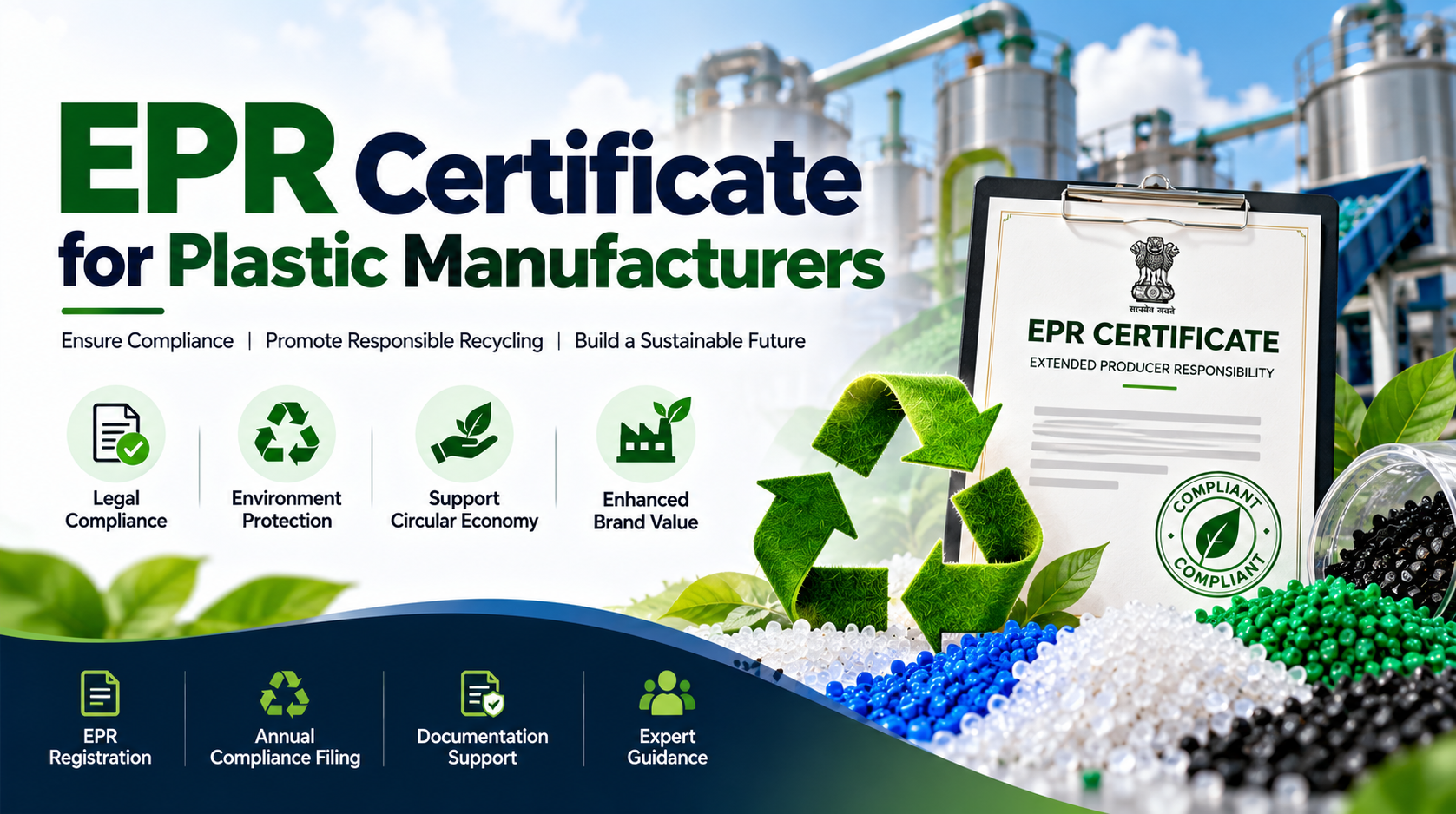
EPR Certificate for Plastic Manufacturers: How Recycled PP Granules Help You Comply
If you make, import or sell products in plastic packaging in India, Extended Producer Responsibility (EPR) is now part of doing business. Brand owners are asking their packaging suppliers for compliance paperwork, and recycled content is moving from a nice-to-have to a requirement for some packaging categories.
This guide explains the basics in plain language and shows where recycled PP granules fit into your compliance plan.
What EPR Means for a Plastic Manufacturer
Under India’s Plastic Waste Management Rules, producers, importers and brand owners (PIBOs) must register on the CPCB EPR portal, report the plastic packaging they place on the market, and meet recycling targets. They meet those targets by buying EPR certificates from registered plastic waste processors.
For rigid packaging (Category I), the rules also set minimum recycled content that rises year by year, reaching 60% by 2028–29. Polypropylene is widely used in rigid packaging such as containers, caps and closures, which is why PP buyers are paying closer attention. If you are still choosing your material, start with virgin vs recycled PP granules.
In Short
An EPR certificate proves that plastic waste was processed on your behalf. Recycled content is a separate requirement. Check the latest rules on the CPCB portal, as targets and timelines have been amended more than once.
EPR Roles in the Plastic Value Chain
Knowing where you sit tells you which obligations apply to you.
| Role | Typical responsibility | What it means for sourcing |
|---|---|---|
| Brand owner / producer | Registers on the CPCB portal, files returns, buys EPR certificates, meets recycled-content targets | Needs traceable recycled material and paperwork |
| Packaging manufacturer | Supplies packaging to brands; often asked to prove recycled content or compliance | Needs a granule supplier who can document the material |
| Registered plastic waste processor | Recycles waste and generates EPR certificates on the portal | Certificates come from registered processors, not from every supplier |
Registration rules and thresholds depend on your exact role, so confirm your category with the CPCB portal or a compliance consultant. This guide is general information, not legal advice.
How Recycled PP Granules Support Your Compliance
Recycled granules are not a substitute for an EPR certificate, but they help in practical ways.
They help you meet recycled-content targets
Using recycled PP in rigid products moves you toward the minimum recycled content the rules require. See the benefits of recycled plastic granules.
They give you a documented material trail
Brand customers increasingly ask where recycled material came from. A manufacturer who can explain feedstock and process makes that conversation easy. Read how recycled PP granules are manufactured.
They can lower material cost
Recycled grades are often priced below virgin, which helps offset compliance costs. Compare rates in PP granules price per kg.
They suit many rigid applications
Natural, black, coloured, filler and copolymer grades cover a wide range of moulded products. See black vs natural vs coloured vs milky PP granules.
Limits apply for food contact
Recycled material is restricted in some food-contact packaging, and the rules treat that case separately. Confirm your application before you specify recycled grades.
Four Steps to Build a Compliant Sourcing Plan
A simple order of work for plastic manufacturers.
Confirm Your Category
Identify whether your products fall under rigid, flexible or multilayered packaging, and whether you are a producer or a supplier to one.
Check Your Targets
Review the current recycling and recycled-content targets for your category on the CPCB portal, including any carry-forward provisions.
Qualify a Recycled Supplier
Ask for batch test data and a trial lot. Our guide to how to check PP granule quality lists what to request.
Keep Your Records
Store invoices, batch reports and supplier documents together, so you can answer customer and audit queries quickly.
Ask Suppliers the Right Documentation Questions
Before you rely on any supplier for compliance claims, ask what documents they can provide and whether they are registered where required. Our checklist in eco-friendly plastic raw material suppliers in India covers what to ask, and whether PP is recyclable explains the material basics.
Recycled PP Granules From Bawana, New Delhi
Evonpolymers manufactures recycled PP granules at Bawana Industrial Area, New Delhi, in natural, black, coloured, filler and PPCP grades. Tell us your product, process and monthly volume, and we will share test data and confirm what documentation is available for your requirement.
Frequently Asked Questions
Q1Who needs an EPR certificate for plastic?
Producers, importers and brand owners of plastic packaging must meet EPR targets, which they do by purchasing certificates from registered processors. Check the CPCB portal for how the rules apply to your role.
Q2Does buying recycled PP granules give me an EPR certificate?
No. Recycled granules help with recycled-content targets and material traceability. EPR certificates are generated separately by registered plastic waste processors on the CPCB portal.
Q3Can I use recycled PP in food-contact packaging?
Recycled material is restricted in many food-contact uses, and the rules handle this case separately. Confirm your application and applicable standards before you specify it.
Q4What documents should I ask a recycled granule supplier for?
Batch test reports for MFI, moisture and ash, a clear GST invoice, and any documents that support recycled-content claims. For MFI basics, see understanding Melt Flow Index (MFI).
Q5Where can I sell my own plastic scrap?
Many recyclers take back clean production scrap. See where to sell plastic scrap near me for options.
Planning to Add Recycled PP to Your Production?
Share your product, process and monthly volume. We will recommend a grade, share test data and send a clear per-kg quote.